Dragon boat, rowing and canoeing: the differences
In a dragon boat, paddlers face forward and use a single-bladed paddle that is not attached to the boat. In rowing, athletes sit with their backs to the direction of travel and the oars are fixed to the boat. Canoeing and kayaking are usually done in boats for one or a few people.
· 4 min read
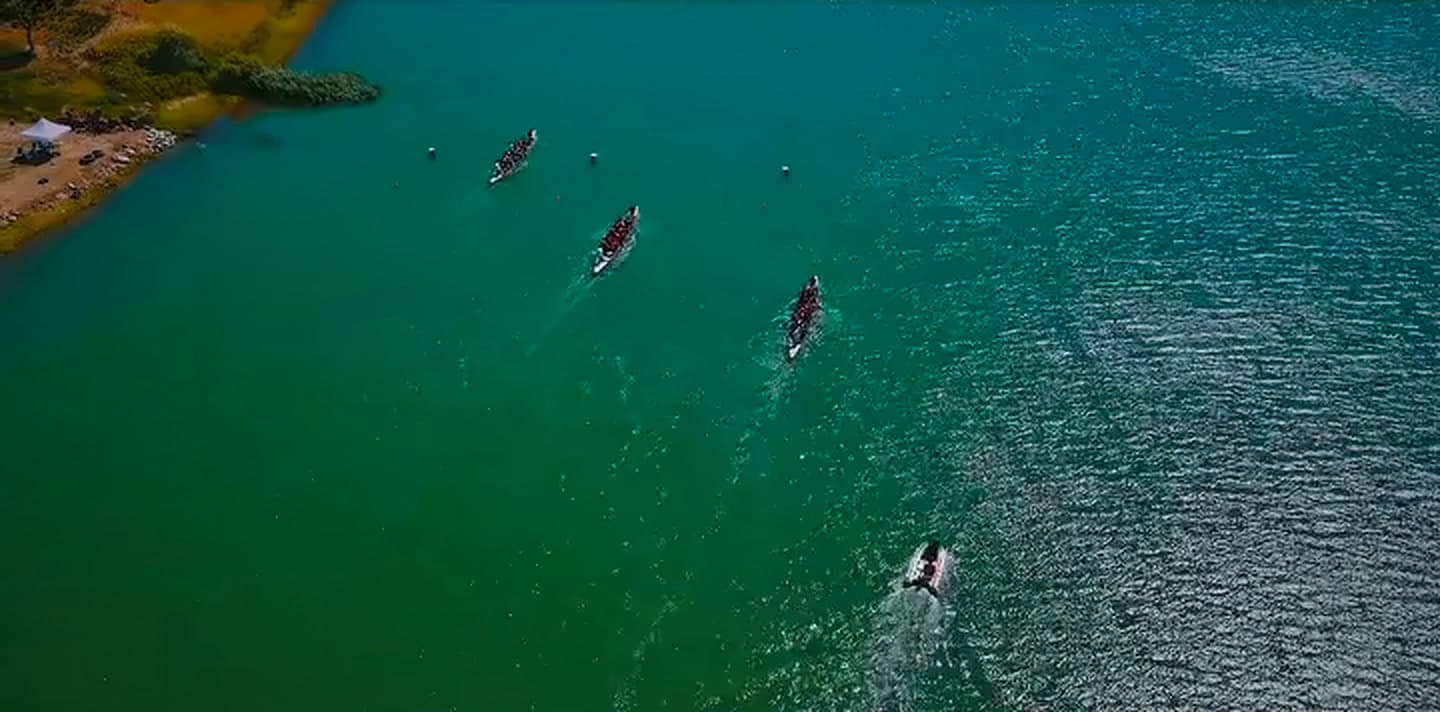
At a glance
| Dragon boat | Rowing | Canoe / kayak | |
|---|---|---|---|
| Facing | Forward | Backward | Forward |
| Paddle | Single blade, held free | Oar fixed in an oarlock | Single blade (canoe), double (kayak) |
| People per boat | 10 or 20 paddlers + drummer + steerer | 1, 2, 4 or 8 | Usually 1, 2 or 4 |
| Learning curve | Basic stroke in one session | Longer | Moderate |
| Fit for company events | Very good for big groups | Small groups | Small groups |
Dragon boat
A standard boat carries 20 paddlers, a drummer and a steerer; small boats carry 10 paddlers. Paddlers sit in pairs, each pulling a single-bladed paddle on one side. The international federation, IDBF, was founded in 1991 and the sport is raced in more than 60 countries. At Bursa Dragon Cup crews race with 12 paddlers, 1 drummer and 1 steerer.
Rowing
In rowing, athletes face backwards. The oars are fixed to the boat with oarlocks and a sliding seat lets rowers drive with their legs. Boats range from singles to eights. The technique takes longer to learn than dragon boating.
Canoe and kayak
In canoes and kayaks paddlers face forward. Kayaks use a double-bladed paddle, canoes a single blade. Boats usually hold one, two or four people. Dragon boating also sits under canoe federations: in Turkey, races follow Turkish Canoe Federation rules.
Which suits a company event?
If you want to get a large group racing in the same boat quickly, dragon boating is the best fit. The basic stroke can be learned in one practice session and 14 people work toward one goal. Rowing, canoeing, SUP and SUP yoga suit smaller groups and regular training. Master Rowing Club offers all five at Dağyenice year round.