The dragon boat start: how the first strokes shape the race
In a dragon boat the start is the first run of strokes that gets the boat moving from a standstill. Crews begin with short, quick strokes to get a heavy 14-person boat going and lengthen them as it speeds up. In a 200-metre race that lasts about a minute, a bad start is hard to make up.
· 4 min read
On the start line
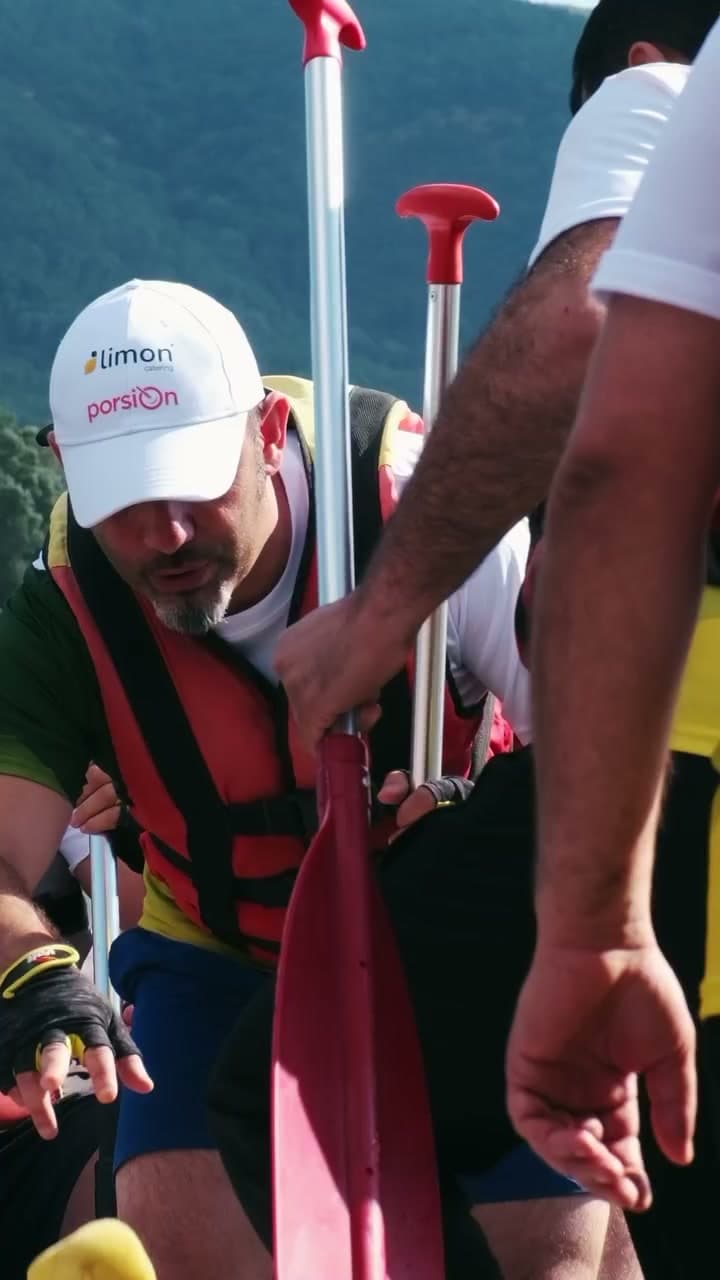
The boats line up on the start and the steerer holds the boat straight in its lane. On the starter's call the paddlers reach forward, set their blades for the catch and wait. Nobody pulls yet. The race starts on the starter's command.
The first strokes: short and quick
Getting a stationary boat moving with long strokes is like pulling away on a bike in top gear. So most crews open with a few deep, powerful strokes and then switch to short, quick ones. The drummer counts the strokes out loud, but paddlers follow the pacers' blades rather than the count.
The most common mistake here is slapping the blade into the water in the excitement. Splashing water does not push the boat. The blade should go in quietly and fully, then pull.
Lengthening out
Once the boat has speed, the strokes get longer and the rate drops a little. The drummer or steerer calls this with a single command, and the whole crew has to lengthen on the same stroke. If half the boat lengthens and half keeps going short, the timing breaks and the boat slows.
Pacing 200 metres
| Phase | Stroke | Who leads |
|---|---|---|
| Start | A few deep strokes, then short and quick | Drummer counts, pacers set the rhythm |
| Transition | Strokes lengthen, rate drops a little | Drummer or steerer, one call |
| Race pace | Long, strong, synchronised strokes | Pacers, backed by the drummer |
| Finish | Rate rises again, paddle through the line | Drummer and steerer |
Races are short, so margins are often tenths of a second. In the 2026 Metropolitan Municipality Cup (B) final, first and second were 0.63 seconds apart (1:00.27 and 1:00.90).
Practising starts
- Practise the start as a separate drill: short efforts with rest in between.
- Agree the drummer's count in advance, so everyone knows how many deep and short strokes come first.
- Pick one word for the transition call and never change it.
- Film one attempt from the shore on a phone. You will see straight away whether the blades go in together.